Among the many branches of fantasy literature, few genres possess the raw power and primal spirit of Sword & Sorcery.
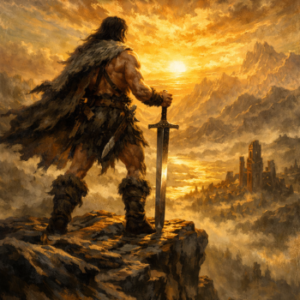 The term evokes images of lone warriors striding across ancient landscapes, forgotten temples rising from jungle ruins, and sinister sorcerers wielding dark and forbidden powers.
It is a genre defined not by grand armies or world-saving quests, but by the visceral adventures of individual heroes struggling against the dangers of a brutal and mysterious world.
Yet despite its enormous influence on modern fantasy, Sword & Sorcery is often misunderstood. Many readers assume it is simply another name for fantasy in general. In reality, it represents a distinct tradition with its own themes, tone, and storytelling style.
To understand Sword & Sorcery, we must return to its origins in the pulp magazines of the early twentieth century.
The Origins of Sword & Sorcery
Sword & Sorcery first emerged during the golden age of pulp fiction in the 1920s and 1930s. These inexpensive magazines published adventure stories that combined elements of horror, mythology, historical fiction, and fantasy.
Among the most influential of these publications was Weird Tales, a magazine that would become the birthplace of many legendary fantasy heroes.
It was within the pages of Weird Tales that author Robert E. Howard introduced the world to one of the most iconic figures in fantasy literature: Conan the Barbarian.
Howard’s Conan stories were unlike anything readers had encountered before. Rather than presenting a noble knight or a chosen hero destined to save the world, Howard gave his audience a fierce and independent barbarian navigating a harsh prehistoric world filled with sorcery, monsters, and treacherous civilizations.
These stories established many of the core elements that would come to define Sword & Sorcery.
The Lone Hero of Sword & Sorcery
At the heart of most Sword & Sorcery tales stands a lone protagonist.
Unlike the fellowship-style heroes found in epic fantasy, Sword & Sorcery protagonists are often wanderers, mercenaries, thieves, or outcasts. They travel through strange lands guided primarily by instinct, survival, and personal ambition.
Conan himself embodies this archetype perfectly. Over the course of his adventures he appears in many roles:
- A young thief climbing the towers of Zamora
- A pirate sailing the Western Sea
- A mercenary fighting foreign wars
- And eventually, a king ruling the mighty kingdom of Aquilonia
What unites these different stages of his life is the sense that Conan remains fundamentally a free man, never fully belonging to the societies he encounters.
This theme of the outsider hero became one of the defining characteristics of the genre. Other authors later explored similar figures, including Fritz Leiber and Michael Moorcock, whose characters further expanded the possibilities of Sword & Sorcery storytelling.
Adventure Over Destiny
Another defining feature of Sword & Sorcery is its focus on immediate adventure rather than grand destiny. In epic fantasy, heroes often carry the burden of saving entire worlds or fulfilling ancient prophecies. Their journeys unfold across vast wars and historical conflicts.
Sword & Sorcery operates on a much more personal scale. A typical story may revolve around:
- A stolen jewel
- A cursed temple
- A dangerous expedition into forgotten ruins
- A battle against a powerful sorcerer
These adventures are intense, self-contained, and often unpredictable. The hero’s goal is rarely to save civilization itself, but simply to survive the ordeal and emerge stronger.
This structure allows the stories to move quickly, emphasizing action, atmosphere, and danger.
The Shadow of Sorcery
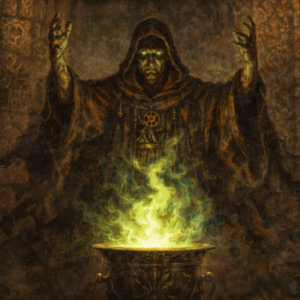 Despite the prominence of warriors and blades, magic plays a crucial role in Sword & Sorcery tales.
However, the magic of this genre differs greatly from the structured spell systems often seen in modern fantasy. The presence of such forces adds a constant sense of unease to Sword & Sorcery adventures.
Sorcery in the Hyborian Age and similar worlds is typically dark, mysterious, and dangerous.
It is associated with:
- Ancient cults
- Forgotten civilizations
- Forbidden knowledge
- Demonic entities and cosmic horrors
Howard’s sorcerers are rarely benevolent scholars. Instead they are figures of corruption and ambition, seeking power through ancient rituals and hidden lore.
The hero may wield a sword of steel, but the enemies he faces often command powers far beyond the physical world.
A World of Ruins
Sword & Sorcery settings are frequently defined by the remnants of fallen civilizations.
Rather than depicting newly rising kingdoms, these stories often take place in worlds already past their golden age. Across the landscapes of the Hyborian Age, Conan encounters:
- Ruined temples swallowed by jungle
- Cities abandoned to strange creatures
- Ancient tombs filled with forgotten horrors
These locations give the genre a powerful sense of deep time and mystery. The world feels older, darker, and far more dangerous than the orderly realms of traditional high fantasy.
Every ruin hints at lost histories and ancient catastrophes.
A Genre That Endures
Although Sword & Sorcery began in the pulp era, its influence can still be seen across modern fantasy, film, games, and art.
The image of the lone warrior confronting dark sorcery and ancient evil remains one of the most enduring symbols of heroic adventure. From the earliest stories of Robert E. Howard to the countless creators inspired by his work, Sword & Sorcery has never truly disappeared.
Instead, it continues to reappear in new forms, carried forward by readers and writers who are drawn to the primal thrill of adventure in a dangerous and mysterious world.
The Spirit of Sword & Sorcery
While many elements contribute to sword and sorcery, the true spirit of the genre lies in its tone.
Sword & Sorcery is bold, visceral, and atmospheric. Its stories are driven by movement, danger, and discovery. The heroes are not saints or saviors. They are flawed, determined individuals navigating a world where strength, cunning, and courage are often the only paths to survival.
This raw immediacy gives the genre a unique energy that continues to resonate with readers nearly a century after its birth.
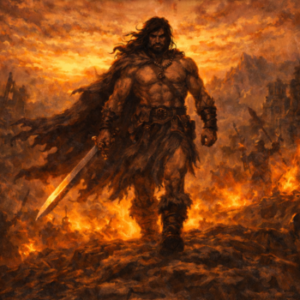 At its core, sword and sorcery is not about kingdoms or destiny.
It is about the individual hero facing the unknown.
A warrior standing alone against darkness.
A blade raised against ancient evil.
And the timeless allure of adventure in a world where anything may lie waiting beyond the next ruined tower.