The greatest fantasy worlds rarely feel magical because of magic alone. They feel real because they seem to have existed long before the story began.
A lonely watchtower standing over an abandoned road. Moss-covered walls where kings once held court. An old bridge whose builders are no longer remembered. A forgotten frontier where empires once clashed.
These places carry a weight that goes beyond scenery. They suggest lives lived, victories won, kingdoms lost, and generations that have vanished into memory.
That feeling is difficult to define, yet almost every fantasy reader recognizes it instinctively. Some stories invite us into worlds that seem constructed solely for the adventure at hand. Others make us feel as though we have stepped into a living land whose history stretches back centuries beyond the first page.
The difference often has very little to do with magic. Instead, it comes from the role of history in fantasy, where imagined worlds are built upon the same foundations that shaped our own civilizations.
Every Great Fantasy World Has a Past
Not historical fiction… Geography. Migration. Warfare. Trade. Religion. Politics. Architecture. The rise and fall of kingdoms, and the slow accumulation of generations leaving their mark upon the landscape.
Fantasy may transport us to places that never existed, yet the worlds that linger in our imagination are often those that feel as though they could have existed somewhere beyond the edge of history.
Perhaps that is because history gives fantasy something more valuable than realism.
It gives it a soul.
Time Leaves Its Mark: The Role of History in Fantasy
Real landscapes are never empty. Every hill, river, forest, and coastline bears traces of those who came before.
Roman roads still cut across Britain nearly two thousand years after they were first laid. Medieval castles dominate valleys long after the kingdoms that built them disappeared. Ancient trade routes continue to shape modern cities, while forgotten earthworks lie hidden beneath forests that reclaimed them centuries ago.
History leaves layers behind, with every generation inheriting the world left behind by the last.
This is one of the reasons history in fantasy feels so powerful: imagined worlds become convincing when they understand this simple truth.
A kingdom should not appear fully formed. Cities should not exist without reason. Castles belong where borders once mattered. Ports grow because merchants travelled there. Remote villages survive because generations learned how to live from the land around them. Roads connect places that have needed one another for centuries.
Even ruins tell stories.
An abandoned fortress suggests an old war. Crumbling walls hint at changing borders. A deserted temple implies beliefs that once shaped entire civilizations before fading into memory.
The reader may never learn every detail, nor should they. What matters is the sense that every place belongs to a much larger story than the one unfolding before us.
History transforms scenery into atmosphere.
The world begins to feel inhabited by memory itself.
Landscapes Remember
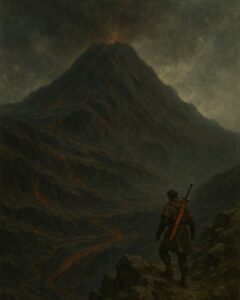 There is a reason so many memorable fantasy journeys take place through old places.
Ancient forests.
Forgotten borderlands.
Mountain passes.
Desolate moors.
Weathered castles overlooking empty valleys.
These landscapes possess an emotional quality that modern settings rarely replicate.
They feel lived in.
A forest becomes more than a collection of trees when generations have hunted beneath its canopy, hidden from invading armies, or built forgotten shrines among its roots. A lonely road gains significance when it once carried merchants, pilgrims, soldiers, and kings before falling into silence.
Even wilderness has history.
Forests reclaim abandoned villages.
Rivers alter forgotten boundaries.
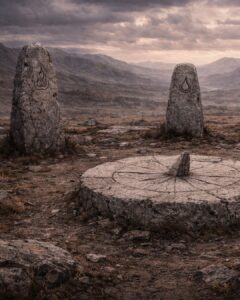
Stone circles remain after the people who raised them have vanished.
Nature and civilization become intertwined through the passing of centuries.
This relationship between landscape and memory gives fantasy much of its emotional depth. Readers feel they are travelling through places where countless stories have already unfolded, even if only one of those stories is being told.
The world extends beyond the edges of the narrative.
It existed before the hero arrived.
It will continue after they leave.
The Echoes of Forgotten Kingdoms
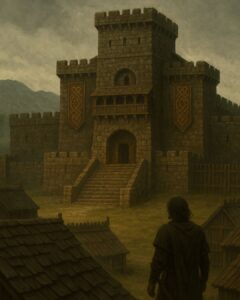 History is filled with kingdoms that disappeared.
Some survive only through scattered ruins or fragments of writing. Others are remembered by little more than place names or broken walls hidden beneath fields.
There is something profoundly compelling about civilizations that have slipped beyond living memory.
Fantasy has long drawn upon this feeling. Lost kingdoms suggest that greatness is temporary. Empires crumble, capitals become ruins, roads fall into disrepair, and borders shift until they are forgotten entirely.
This constant sense of change gives fantasy worlds emotional gravity. Victory becomes meaningful because readers understand that no kingdom, however mighty, lasts forever.
Every civilization eventually joins those that came before it. That awareness introduces melancholy without despair. It reminds us that history is not simply a record of triumphs or defeats, but an ongoing cycle of creation, decline, renewal, and rediscovery.
The ruins encountered by today’s travellers were once someone’s flourishing homeland, just as tomorrow’s ruins may be today’s greatest city. Fantasy becomes richer when it quietly acknowledges this truth.
And like the real past, the history of fantasy worlds is never fully revealed. There are gaps, forgotten names, vanished peoples, and unanswered questions — and it is often those mysteries that linger longest in the reader’s imagination.
Civilizations Are Built, Not Invented
One of the quiet strengths shared by many enduring fantasy settings is that they rarely resemble inventions.
Instead, they resemble civilizations.
Real civilizations emerge over centuries through countless small forces working together. Rivers encourage settlement. Mountains divide peoples. Coastlines invite trade or invasion. Prosperity attracts ambition. Conflict redraws borders. Dynasties rise before eventually collapsing beneath their own weight.
Fantasy worlds become believable when they seem to follow these same rhythms.
Readers may never consciously analyze why one kingdom feels authentic while another feels artificial, but they recognize the difference almost immediately.
A believable realm has neighbours with complicated histories. Old rivalries. Shifting alliances. Border disputes that outlive the rulers who began them. Merchant roads connecting distant regions. Fortresses overlooking mountain passes because those passes have mattered for generations.
None of this requires lengthy explanation.
Often it is enough to glimpse the consequences.
A ruined watchtower beside an abandoned road tells us more than pages of historical exposition ever could. Like archaeology, fantasy often becomes most compelling through what remains rather than what is fully explained.
The past is always present, even when no one speaks of it.
The Masters of Imagined History
Among the authors who understood the power of historical depth, few loom larger than Robert E. Howard and J. R. R. Tolkien. Although their worlds differ enormously in tone, both created settings that feel ancient rather than merely imaginary.
Howard’s Hyborian Age, the birthplace of Sword & Sorcery, was more than a backdrop for heroic adventure. It was an imagined age shaped by migrations, collapsing civilizations, tribal expansion, frontier conflict, and forgotten kingdoms.
His heroes often wandered through lands already layered with centuries of history. Ancient cities stood abandoned in the wilderness. Lost peoples lingered on the edges of civilization. Every journey hinted at older ages buried beneath the present.
Tolkien approached historical depth from a different direction, yet achieved a remarkably similar effect. Middle-earth feels vast because every landscape carries the memory of previous ages.
The kingdoms encountered during The Lord of the Rings exist within an immense historical continuum. Ruins, monuments, ancient roads, abandoned watchtowers, and fading realms constantly remind readers that they inhabit only one chapter within a much longer story.
Neither writer relied upon historical detail for its own sake.
Rather, history became the invisible architecture supporting every adventure. Readers sensed that the world possessed depth beyond what appeared on the page.
That illusion remains one of fantasy’s greatest achievements.
Building Worlds That Feel Remembered
This same philosophy has shaped my own approach to fantasy — and particularly to Sword & Sorcery.
Whether writing of the clans in Tales from the Inferno, the wandering borderlands of The Ironbound Chronicles, or the Bronze Age landscapes explored throughout the Heracles trilogy, the goal has never been to recreate history itself.
Instead, it has been to understand why history gives imagined worlds their sense of authenticity.
Tales from the Inferno is not a strict recreation of Iron Age Britain or Ireland, yet it is shaped by many of the same forces that influenced Celtic tribal cultures. Clans rise and fall, alliances shift, old rivalries endure, and settlements grow where geography allows them to flourish.
Borders emerge for reasons. Roads connect places that have depended upon one another for generations. Likewise, the wandering roads of The Ironbound pass through lands that feel older than any single adventure. Villages have histories. Frontier settlements exist because kingdoms have long contested those regions. Even when those histories remain largely unseen, they influence every encounter.
The Heracles Of Blood & Bronze trilogy draws upon the Bronze Age as its historical foundation. From rugged landscapes and emerging kingdoms to ancient settlements, trade, and the material culture of the eastern Mediterranean, its world is rooted in a believable past that allows the legendary to emerge naturally.
None of these settings attempt to imitate history directly.
Rather, they borrow history’s underlying logic.
Fantasy becomes most immersive when the world appears to have grown naturally over generations instead of being assembled solely for the plot.
Readers rarely notice the difference consciously.
They simply feel it.
Why We Believe History Is the Soul of Fantasy
 Perhaps that is the quiet secret behind fantasy’s enduring appeal. We do not fall in love with imagined worlds because they are impossible, but because they feel possible — not in any literal sense, but emotionally.
Their kingdoms possess histories, their landscapes bear scars, their roads lead somewhere older, and their ruins remind us that countless lives unfolded long before the hero’s journey ever began.
History grants fantasy continuity, allowing each story to exist within something far larger than itself.
When readers encounter an abandoned fortress overlooking a forgotten valley, they instinctively imagine the generations who once stood upon its walls; when they cross an ancient bridge or follow an old road disappearing into distant hills, they sense lives stretching far beyond the immediate narrative, as though the world continues in every direction beyond the page.
That feeling cannot be manufactured through spectacle alone. It emerges from the slow accumulation of memory, from the quiet suggestion that every stone has witnessed something worth remembering, and from the sense that each landscape has been shaped by the passage of countless generations.
Magic may ignite our imagination, and heroes may carry us through adventure, but it is history that convinces us these worlds were waiting long before we ever opened the book.
Perhaps that is why the greatest fantasy never truly feels invented.
It feels remembered.