Long before kingdoms were written into chronicles, before banners flew above forgotten keeps or heroes carved their names into legend, there were only voices.
Around fires, beside rivers, beneath ancient trees, people spoke the names of the world around them. They named the mountains they feared, the forests they wandered, the rivers that carried them home. They gave names to their children, their ancestors, and eventually to the stories that would outlive them all.
Perhaps that is why the greatest fantasy worlds never feel as though they were simply invented. Like embers carried from one generation to the next, the language in fantasy continues to glow long after the story itself has ended.
The Echo Before the Flame – More Than Words
Language is often treated as little more than a means of communication, yet it has always been something far richer. Every name suggests a history. Every place whispers of those who came before. Long after empires fall, words remain, echoing through the generations like embers refusing to die.
Fantasy has always understood this truth. Some of its greatest worlds are built not only upon castles, monsters, and magic, but upon the quiet power of language itself.
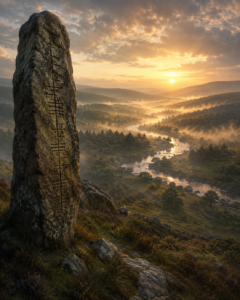 Language preserves the memory of a people long after buildings have crumbled and rulers have faded into obscurity. It records how communities saw themselves, how they understood the land around them, and what they valued enough to name.
Real cultures reveal themselves through language. We inherit words from ancient migrations, forgotten occupations, vanished kingdoms, and countless generations of ordinary lives. Languages absorb influences from neighbours, invaders, traders, and travellers until they become living records of history themselves.
Fantasy may not follow our world’s history, but it succeeds for the same reason. The strongest imagined worlds feel as though their languages have lived lives of their own.
Readers rarely stop to analyze this while turning the pages of a novel. Instead, they experience it instinctively. Certain names simply feel as though they belong together. Others seem strangely out of place, even if we cannot explain why.
That feeling is not accidental.
It comes from an underlying sense of continuity.
A World Woven Through Names
Names are among the smallest details in fantasy, yet they often carry the greatest weight.
A single kingdom’s name suggests an entire civilization. A mountain range hints at forgotten peoples. Rivers seem to possess memories older than the cities built upon their banks. Forests evoke entirely different emotions depending upon the sounds that shape their names.
When these elements share common linguistic roots, something remarkable happens.
The world begins to feel coherent.
Readers may never consciously notice these shared patterns, yet they instinctively recognize that the culture has grown organically rather than being assembled for convenience.
Imagine a kingdom where every settlement sounds entirely unrelated to the next. One village resembles medieval England, another ancient Greece, the next modern Scandinavia, followed by a city with an entirely invented naming style. Individually, none of these names may be poor choices.
Together, however, they fracture the illusion.
By contrast, when names share rhythms, sounds, and familiar structures, they imply generations of shared culture. The landscape itself begins to speak a common language.
The result is subtle but profound. Readers stop seeing individual names and begin believing in an entire civilization.
The Memory Hidden Within Place
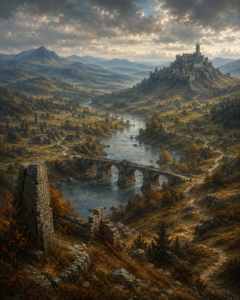 Every real landscape carries traces of those who named it.
Across Britain, for example, countless rivers preserve names far older than the kingdoms that later grew beside them. Hills, valleys, woods, and settlements often reveal layers of cultural change stretching back centuries.
One civilization names a river. Another conquers the land but keeps its ancient name. A third arrives generations later and adapts the pronunciation until its original meaning is almost forgotten.
Fantasy benefits from exactly the same quiet accumulation.
A ruined fortress may retain an older name than the nearby city. A forest may be known by one people through an ancient word while another culture uses a newer translation. Borderlands often reveal blended traditions where languages have gradually merged rather than replacing one another overnight.
None of this requires lengthy explanation within the story. The names themselves suggest lives lived before the opening chapter ever begins.
This is one of fantasy’s greatest strengths. Every journey feels longer because every destination feels older.
When Cultures Have Their Own Voice
Language does more than shape geography.
It shapes people and so does language in fantasy.
The names chosen for kings, farmers, merchants, warriors, priests, or wandering adventurers quietly establish cultural identity before a single line of dialogue is spoken. We often recognize whether a surname sounds Irish, Welsh, Scandinavian, Slavic, Arabic, or Japanese.
We may not understand the language, yet we instinctively perceive shared origins. Likewise, readers naturally recognize families, clans, kingdoms, and rival peoples through shared linguistic patterns. They begin to understand who belongs where, not because an author explains it directly, but because the names themselves create invisible connections.
Names become cultural signposts. When handled thoughtfully, they help readers navigate unfamiliar worlds without requiring endless exposition.
The world begins speaking for itself.
A Living Language
Languages are never static. Over centuries they shift almost beyond recognition. Trade introduces foreign words. Migration carries dialects into new regions. Conquest leaves unexpected traces. Isolated communities preserve older forms long abandoned elsewhere. Meanings evolve, pronunciations soften, and entirely new identities emerge from older foundations.
Not every kingdom should sound identical. Nor should every culture sound completely alien. Neighbouring peoples often resemble one another while still retaining distinct identities. Frontier settlements develop their own character. Ancient empires leave echoes within newer nations. Borderlands become places where languages overlap rather than ending neatly at political boundaries.
These gradual changes create an atmosphere that readers recognize instinctively. A world begins to feel inhabited by generations rather than characters. Its cultures seem inherited rather than assigned.
The Masters of Imagined Language
No discussion of language in fantasy can overlook the extraordinary influence of J. R. R. Tolkien.
Unlike many writers who begin with maps or stories, Tolkien began with language itself. A lifelong philologist, he spent decades developing complete languages for his imagined peoples, complete with their own grammar, vocabulary, sound patterns, and writing systems.
His Elvish tongues, particularly Quenya and Sindarin, drew inspiration from real linguistic traditions — Sindarin, was heavily influenced by the sounds and character of Welsh, while Quenya reflected elements of Finnish and Latin.
These were never intended as decorative inventions. They were complete languages, shaped by centuries of imagined migration, separation, and cultural change. And from those languages, entire civilizations emerged.
The histories of Middle-earth were not simply written and then given names. Rather, the names themselves carried history. Place names, family lineages, kingdoms, and even subtle shifts in pronunciation hinted at ancient relationships between peoples, forgotten kingdoms, and long centuries of change.
Middle-earth possesses such extraordinary depth because its cultures evolved alongside their languages, making the world feel less like an invention than something uncovered from a forgotten age.
Even readers with no knowledge of linguistics can feel that authenticity. They may never recognize why Rivendell, Gondor, Rohan, and Lothlórien each possess such distinct identities, but the consistency of their languages quietly convinces us that these places belong to different cultures with histories reaching far beyond the story itself.
That authenticity has influenced generations of fantasy writers ever since.
Yet language shapes fantasy in many different ways.
Robert E. Howard approached the craft differently, yet no less effectively. He rarely invented complete languages in the way Tolkien did, yet he possessed an extraordinary ear for names.
The Hyborian kingdoms sound ancient because they borrow familiar echoes without ever feeling borrowed outright. They suggest forgotten civilizations that existed long before Conan ever set foot among them.
His kingdoms feel immediately distinct through carefully chosen names and terminology. Cimmeria, Aquilonia, Stygia, Nemedia, Zamora, and countless others evoke unique civilizations long before their customs are ever described. Howard understood that atmosphere often begins with sound.
The right name can suggest an entire culture. A single unfamiliar word can hint at forgotten ages, distant frontiers, and ancient peoples whose stories extend far beyond the immediate adventure.
Neither writer depended upon elaborate explanation. Instead, language quietly carried much of the world’s weight.
Finding the Right Voice
Every fantasy creator eventually faces the same question.
What should this world sound like?
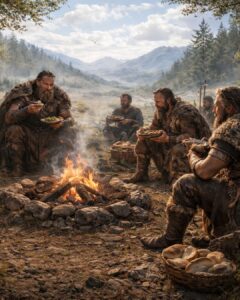 For me, the answer has always been less about invention than inspiration. The names within Tales from the Inferno and The Ironbound Chronicles draw heavily from historical linguistic traditions, particularly Celtic, Anglo-Saxon, and neighbouring European influences.
Rather than creating names at random, I have always been drawn toward patterns that feel as though they belong to living cultures with shared ancestry and long histories.
The goal has never been historical reconstruction.
Fantasy should remain fantasy.
Instead, these traditions provide a foundation that lends familiarity without imitation. They help create places that feel inhabited rather than labelled, where rivers, villages, kingdoms, and characters seem connected by something deeper than coincidence.
Readers may never consciously recognize these influences.
That is perfectly fine. In many ways, that is exactly the point.
Successful worldbuilding often works best when it remains invisible.
The Language in Fantasy We Feel
Fantasy is often celebrated for its towering castles, impossible landscapes, magical relics, mythical and legendary heroes.
Yet some of its greatest achievements are almost impossible to notice directly. Language belongs among these hidden foundations.
Readers rarely pause to admire consistent naming conventions or shared linguistic roots. They do not analyze why one kingdom feels ancient while another feels newly settled. They simply experience the atmosphere those choices create.
A believable fantasy world is not convincing because every detail has been explained. It is convincing because countless small details quietly support one another until disbelief fades away.
Language is one of the strongest of those unseen supports.
It binds cultures together. It gives landscapes memory.
It allows kingdoms to possess identity long before their histories are told.
Most importantly, it reminds us that fantasy is never only about escaping into another world. It is about believing, if only for a little while, that such a world might truly have existed somewhere beyond the edge of memory. And perhaps that is why the greatest fantasy names linger with us long after the final page is turned.
Like old songs, they remain.
Not because we study them.
But because, somehow, they feel as though they have always belonged.